It’s Not Just a Bag, It’s a Baguette!
A Deep Dive into the Iconic Baguette Silhouette
The Fendi Baguette is widely regarded as one of the most influential handbags in modern fashion. Distinctive and endlessly adaptable, the Baguette entered the luxury accessories market in the late 1990s. Even though the Baguette was not an instant success, its appearance on Sex and the City led the silhouette to sell over 100,000 units in one year. The Baguette became a cultural symbol that reshaped how designers approached luxury accessories and how consumers viewed handbags as collectible fashion statements.
A Fashion House Built on Familial Legacy
The house of Fendi was founded in Rome in 1925 by Adele and Edoardo Fendi as a leather goods and furrier workshop. Known for exceptional craftsmanship and innovative design, the brand steadily gained international recognition during the twentieth century.
A major turning point came in 1965 when Karl Lagerfeld joined the house as creative director for fur and later for women’s ready-to-wear. Lagerfeld helped modernize the brand while preserving its reputation for luxury craftsmanship. Over the decades, the Fendi family remained deeply involved in the business, and the company developed a strong identity built on the Roman heritage.
The Baguette’s Beginnings and Eventual Legacy
The Baguette bag was introduced in 1997 and designed by Silvia Venturini Fendi, the granddaughter of Adele and Edoardo Fendi. Her concept was deceptively simple: design a small rectangular bag to be carried under the arm, similar to the way a French baguette is carried on the streets of Paris. This distinctive shape inspired the bag’s name and also set it apart from the larger handbags that dominated the market at the time.
The Baguette’s design featured a short shoulder strap, a compact body, and a front flap closure with the now recognizable FF logo clasp. It was large enough to carry essentials, yet small enough to maintain a sleek silhouette. What made the Baguette truly revolutionary, however, was the decision to produce it in an extraordinary range of materials, colors, and embellishments.
From simple canvas and leather versions to highly decorative designs featuring embroidery, sequins, beads, and exotic skins, the bag quickly evolved into a collectible object.
Fashion insiders initially recognized the Baguette’s appeal, but its influence expanded dramatically through pop culture. One of the most memorable moments came when Sex and the City hero Carrie Bradshaw, played by Sarah Jessica Parker, famously declared, “It’s not a bag, it’s a Baguette” during an episode.
The moment cemented the bag’s place in fashion history and introduced it to a global audience. After that appearance, the Baguette became a must-have accessory for celebrities, stylists, and fashion enthusiasts alike. Fendi would eventually collaborate with SJP to create her own sequin iteration of the iconic silhouette.

A Baguette Flavor for Every Taste
The Baguette helped to define the late 1990s and early 2000s era of fashion when handbags began to take center stage as symbols of personal style. This era was known as the “Logomania” era, where luxury logos were seen as a status symbol, further pushing the Baguette to even greater heights.
Over time, the Baguette has been produced in more than one thousand variations, making it one of the most reinterpreted bag designs in fashion history. Its adaptability has allowed it to remain relevant through shifting trends. While fashion cycles constantly change, the Baguette’s core design remains intact.
Today, the Baguette is widely considered one of the best-selling and most iconic handbags ever created. Vintage versions remain highly sought after in resale markets, and new releases continue to attract both longtime collectors and younger consumers discovering the design for the first time.
In the 30 years since the Baguette’s creation, thousands of iterations have been released through countless collections, collaborations with artists, and creative directors. No matter your style or taste level, Fendi’s Baguette has a style for you. Even better? When you shop with What Goes Around Comes Around, you’re discovering vintage and discontinued pieces that can’t be found anywhere else.
The Fendi Baguette endures because it represents a perfect balance of creativity and cultural relevance. Decades after its debut, the Baguette continues to symbolize the idea that a handbag can be both a timeless accessory and a defining piece of fashion history.
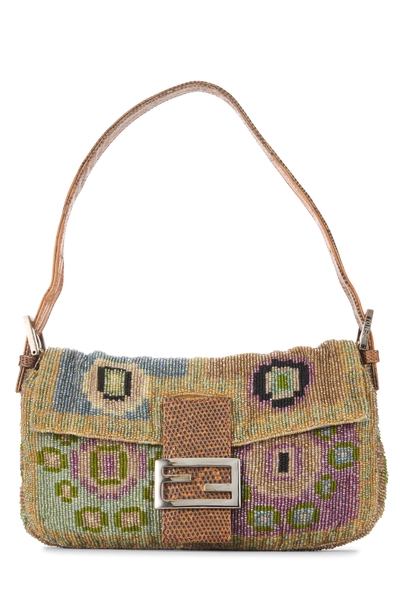

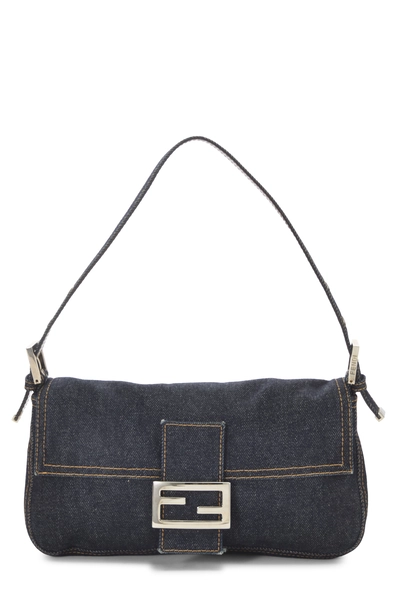
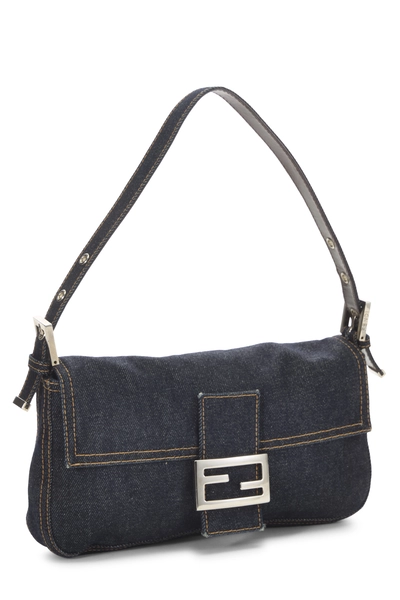
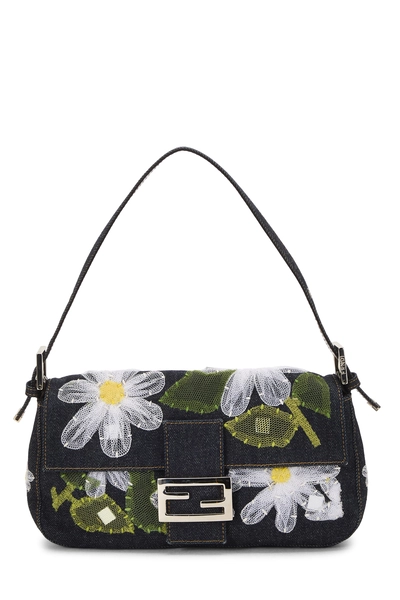

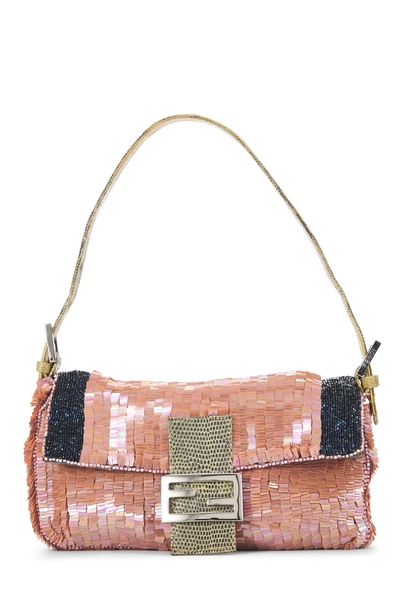
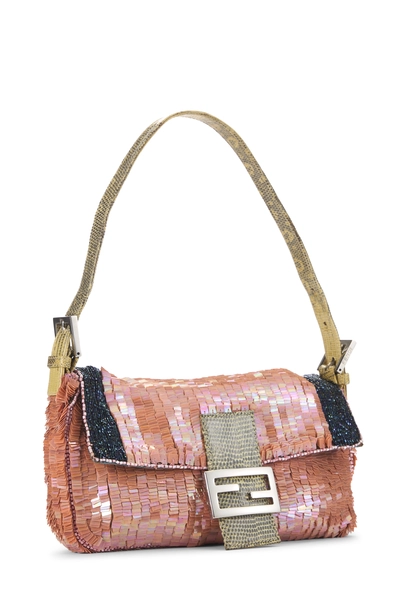
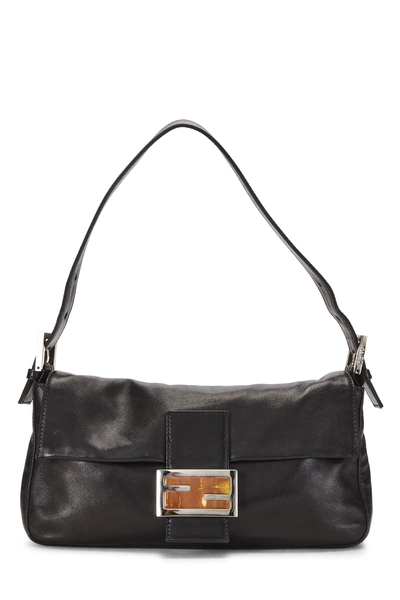
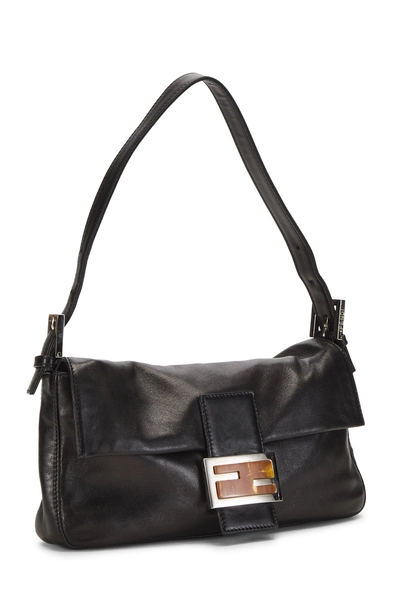


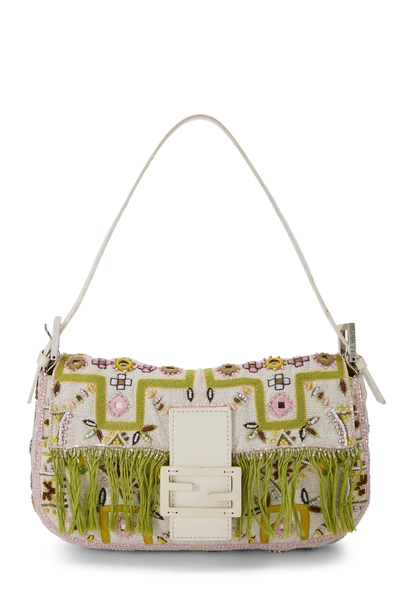
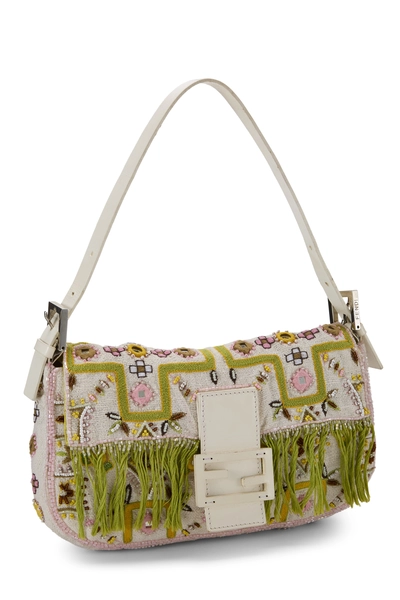
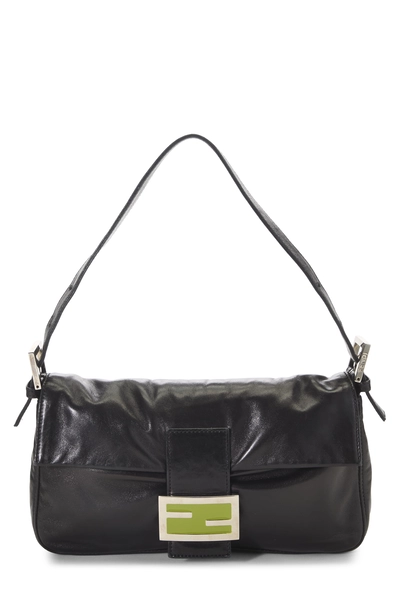


The Fendi Baguette is a small, rectangular shoulder bag created by the Italian fashion house Fendi. Designed to be carried tucked under the arm, the silhouette resembles the way a French baguette is carried. Introduced in 1997, it quickly became one of the most recognizable handbag designs in modern fashion.
Legendary designer Karl Lagerfeld joined Fendi in 1965 as creative director for fur and later women’s ready-to-wear. His work helped modernize the brand while maintaining its reputation for luxury and craftsmanship.
The late 1990s and early 2000s fashion period known as Logomania celebrated visible luxury branding. Bags with prominent logos became status symbols, and the Baguette fit perfectly into this trend.
Since its debut, the Baguette has been produced in over 1,000 variations. These include seasonal designs, limited editions, artist collaborations, and reinterpretations by different creative directors.
What Goes Around Comes Around now offers worldwide direct shipping through DHL. Shop our site in your selected currency. Shipping fees and taxes will be added in checkout.
![flag]() USA
USA![flag]() Algeria
Algeria![flag]() Andorra
Andorra![flag]() Anguilla
Anguilla![flag]() Antigua and Barbuda
Antigua and Barbuda![flag]() Argentina
Argentina![flag]() Armenia
Armenia![flag]() Aruba
Aruba![flag]() Australia
Australia![flag]() Austria
Austria![flag]() Bahamas
Bahamas![flag]() Bahrain
Bahrain![flag]() Barbados
Barbados![flag]() Belgium
Belgium![flag]() Belize
Belize![flag]() Bermuda
Bermuda![flag]() Bolivia
Bolivia![flag]() Bosnia and Herzegovina
Bosnia and Herzegovina![flag]() British Virgin Islands
British Virgin Islands![flag]() Bulgaria
Bulgaria![flag]() Cabo Verde
Cabo Verde![flag]() Canada
Canada![flag]() Cayman Islands
Cayman Islands![flag]() Chile
Chile![flag]() China
China![flag]() Colombia
Colombia![flag]() Cook Islands
Cook Islands![flag]() Costa Rica
Costa Rica![flag]() Croatia
Croatia![flag]() Curaçao
Curaçao![flag]() Cyprus
Cyprus![flag]() Denmark
Denmark![flag]() Dominican Republic
Dominican Republic![flag]() Ecuador
Ecuador![flag]() Egypt
Egypt![flag]() El Salvador
El Salvador![flag]() Fiji
Fiji![flag]() Finland
Finland![flag]() France
France![flag]() French Polynesia
French Polynesia![flag]() Georgia
Georgia![flag]() Germany
Germany![flag]() Gibraltar
Gibraltar![flag]() Grenada
Grenada![flag]() Honduras
Honduras![flag]() Hong Kong
Hong Kong![flag]() Hungary
Hungary![flag]() Iceland
Iceland![flag]() Ireland
Ireland![flag]() Israel
Israel![flag]() Italy
Italy![flag]() Jamaica
Jamaica![flag]() Japan
Japan![flag]() Jordan
Jordan![flag]() Kuwait
Kuwait![flag]() Liechtenstein
Liechtenstein![flag]() Luxembourg
Luxembourg![flag]() Maldives
Maldives![flag]() Martinique
Martinique![flag]() Mexico
Mexico![flag]() Monaco
Monaco![flag]() Montenegro
Montenegro![flag]() Morocco
Morocco![flag]() Netherlands
Netherlands![flag]() New Zealand
New Zealand![flag]() Norway
Norway![flag]() Pakistan
Pakistan![flag]() Poland
Poland![flag]() Portugal
Portugal![flag]() Qatar
Qatar![flag]() Saudi Arabia
Saudi Arabia![flag]() Seychelles
Seychelles![flag]() Singapore
Singapore![flag]() Slovenia
Slovenia![flag]() Sri Lanka
Sri Lanka![flag]() South Korea
South Korea![flag]() Spain
Spain![flag]() Sweden
Sweden![flag]() Switzerland
Switzerland![flag]() Taiwan
Taiwan![flag]() Thailand
Thailand![flag]() Trinidad and Tobago
Trinidad and Tobago![flag]() Turkey
Turkey![flag]() Turks and Caicos Islands
Turks and Caicos Islands![flag]() United Arab Emirates
United Arab Emirates![flag]() United Kingdom
United Kingdom![flag]() Venezuela
Venezuela![flag]() Vietnam
Vietnam


