The Complete Guide to Rolex, Part 1 – Rolex Anatomy
Breaking Down the Details
The world of Rolex is vast, and understanding the brand means getting to know the details that have defined its watches for generations. From the anatomy of a Rolex to the materials, movements, complications and proprietary technologies behind its most iconic models, there’s a lot to unpack. And because there’s no shortage of terminology to learn, this Complete Guide to Rolex breaks it all down across a series of installments. We’ll begin with the essentials, from the components that make up a Rolex to the technologies behind names like Cerachrom and Parachrom, so you can navigate the brand’s very particular language with confidence.
In Part I, we’re starting with the anatomy of a Rolex, breaking down the components and details that make each timepiece tick. Read on to discover everything you need to know about the parts, materials and technology that make a Rolex truly iconic.
The Watch that Started it All
The Complete Guide to Rolex breaks down the brand from the inside out: first, the anatomy, technologies and terminology that explain how Rolex watches are constructed and function; second, the collections that define the catalog; and finally, the unofficial nicknames collectors have created to distinguish some of the most recognizable references and configurations in Rolex history. Whether you’re learning to identify a Rolex, researching a particular reference or simply trying to understand why someone would call a watch a “Root Beer,” consider this your Rolex lexicon, field guide and collector cheat sheet rolled into one.
Few brands have built a vocabulary quite like Rolex. There are words Rolex created itself: Oyster, Perpetual, Cerachrom, Chromalight, Triplock. There are the collections that have become cultural shorthand: the Submariner, Daytona, Datejust, Day-Date, and GMT-Master II. And then there is an entirely separate language Rolex never officially created at all: Pepsi, Cokie, Batman, Kermit, Hulk, Starbucks and a growing cast of collector-given nicknames. To truly understand Rolex, you must understand all three.
Rolex has developed an entire technical vocabulary around them. Some terms describe components found on virtually any mechanical watch. Others refer to proprietary Rolex inventions, materials, systems and trademarks. Knowing the difference is essential to understanding what you are actually looking at, and what makes one Rolex different from another.
Rolex may be famous for watches that are recognizable from across a room, but much of what makes a Rolex a Rolex is hidden in the details: a screw-down crown engineered with multiple waterproofing zones, a hairspring designed to resist magnetism, a ceramic bezel that refuses to fade, or a bracelet extension system that can be adjusted without a tool.
Before diving into Rolex’s proprietary technology, it helps to know your way around the watch itself.
The Anatomy of a Rolex
Case
The case is the protective housing surrounding a watch’s movement. It forms the structural body of the watch and typically consists of a middle case, caseback, crystal, bezel, and winding crown.
On most modern Rolex watches, that means some version of the brand’s famous Oyster architecture. Cases vary considerably across Rolex history and collections. Their dimension, proportions, materials, crown guards, lug shapes and construction can all help identify a particular model or generation.
Pro tip: Do not confuse the case with the caseback. The case describes the complete housing; the caseback is specifically the rear component that closes it.
Caseback
The caseback closes the rear of the watch case and protects the movement within. Rolex is historically associated with solid screw-down casebacks, but there are exceptions. The moderns Perpetual 1908, for example, features a transparent sapphire caseback through which its movement can be viewed. Casebacks can also be important authentication points. Engravings, constructions, finishing and reference information vary across Rolex eras models.
Bezel
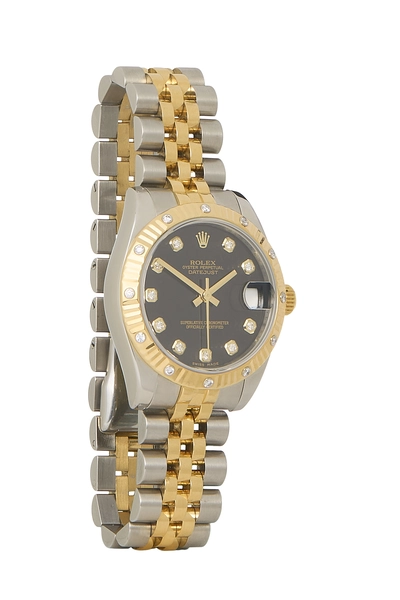
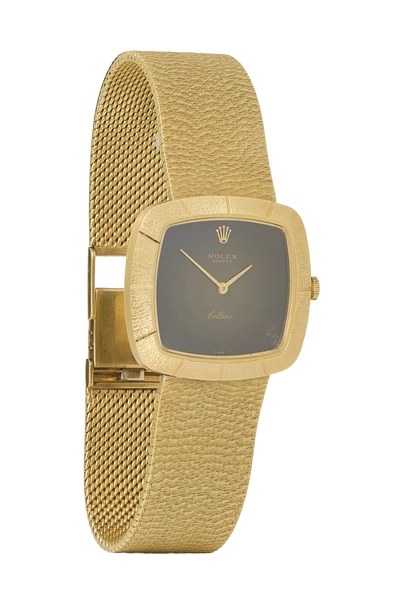
The bezel is the ring surrounding the crystal. On a Rolex, it may be purely aesthetic, immediately recognizable or an integral part of the watch’s functionality. Rolex bezels include smooth, fluted, gem-set and engine-turned historical designs, as well as functional bezels designed for diving, travel, motorsport and other purposes.
A Submariner uses its bezel to measure elapsed dive time. A GMT-Master II uses its 24-hour bezel to read an additional time zone. A Daytona’s tachymetric scale can calculate average speed over a known distance. And on the Sky-Dweller, the bezel does something particularly unusual: it interacts mechanically with the movement itself through Rolex’s Ring Command system. The bezel, in other words, is not always just decoration.
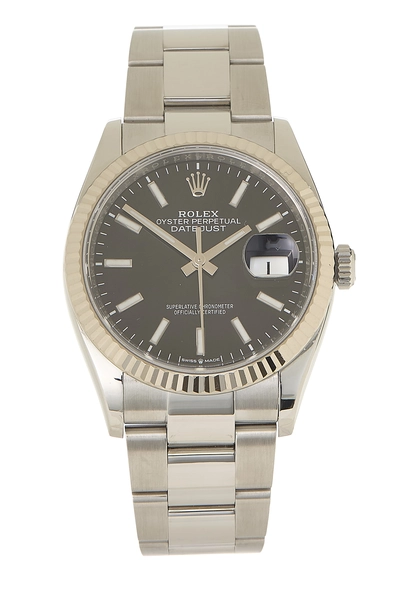
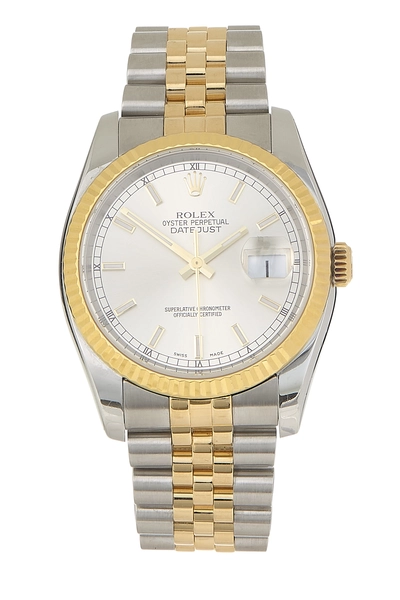
Fluted Bezel
Few Rolex design elements are more recognizable than the fluted bezel.
Its ridged pattern is now largely aesthetic, but its origins were functional. On the original Oyster case introduced in 1926, the bezel was screwed onto the case to help endure waterproofness, and its fluting allowed it to be gripped with a specialized tool.
Rolex later changed the way the bezel was secured, but the fluted design remained. Today, Rolex’s fluted bezels are fashioned exclusively in 18k gold or 950 platinum. The fluted bezel is strongly associated with the Datejust and Day-Date, but it does not define either collection. Both have existed with other bezel configurations.
Dial
The dial is the face of the watch beneath the crystal. It carries the hour markers, minute track, Rolex signature and other information necessary to read the watch’s functions. Depending on the model, this may include a date window, day display, chronograph registers, month indicators, or additional time-zone displays.
Rolex has produced an extraordinary variety of dials throughout its history, from understated lacquer and sunray finishes to mother-of-pearl, meteorite, natural stone and elaborate gem-set examples.
Dial details are particularly important in vintage Rolex collecting. Typography, coronets, lume plots, minute tracks, depth ratings and other seemingly tiny details can help distinguish one dial generation or variation from another.
Hour Markers
Hour markers, or indexes, indicate the hours around the dial. Depending on the Rolex, these may take the form of batons, dots, geometric shapes, Arabic numerals, Roman numerals or gemstones. On many modern Rolex watches, the applied hour markers are made from 18k gold to help prevent tarnishing.
Hands
The hands indicate the time and, depending on the model, additional functions. At minimum, most Rolex watches feature hour and minute hands. A central seconds hand is also common. Professional models may incorporate additional hands for specific purposes. The GMT-Master II and Explorer II, for example, use an additional 24-hour hand.
One of Rolex’s most recognizable designs is the so-called Mercedes hour hand, identified by the circular section divided into three segments near its tip. Despite the collector's nickname, it has no connection to the Mercedes-Benz automobile company.
Date Window
The date window is the aperture displaying the numerical date. On many Rolex watches it appears at 3 o’clock, often beneath a Cyclops magnifying lens. The Datejust helped make this arrangement one of Rolex’s defining visual signatures.
Cyclops Lens
The Cyclops lens is the magnifying lens positioned above the date display on many Rolex watches. Rolex introduced the feature in 1953 to improve date legibility. Modern versions are made from sapphire crystal and feature anti-reflective treatment. The Cyclops has since become so closely associated with Rolex that its presence, or absence, can fundamentally alter the appearance of a watch.
Not every Rolex with a date has historically used a Cyclops. Professional diving models designed for extreme depths, for example, have followed different construction requirements across generations.
Crystal
The crystal is the transparent covering over the dial. Modern Rolex watches predominantly use synthetic sapphire crystal, prized for its exceptional scratch resistance. Vintage Rolex watches may instead have acrylic crystals, often referred to by collectors as Plexiglas or simply Plexi. The difference maters. Acrylic is softer and scratches more easily, but its warmth, distortion and ability to develop character are part of the visual appeal of vintage watches.
Crown
The winding crown is the small control mounted on the side of the case. It allows the wearer to manually wind the movement and set functions such as time and date. On Rolex Oyster watches, the crown screws securely against the case to help maintain waterproofness.
Lugs
The lugs are the projections extending from the watch case that connect it to the bracelet or strap. Their shape and proportions can subtly transform the appearance of a Rolex. Vintage watches may have drilled lug holes, while many later references conceal the spring-bar access from the exterior. Lug width, thickness, chamfers and finishing are all useful product knowledge details when distinguishing generations.





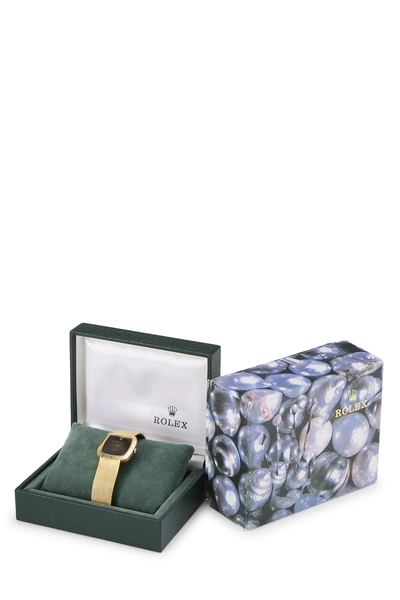
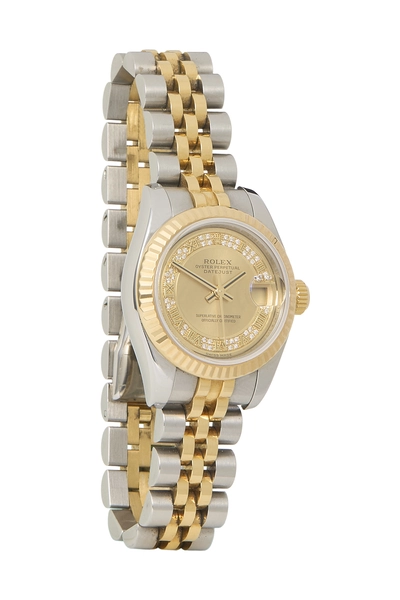
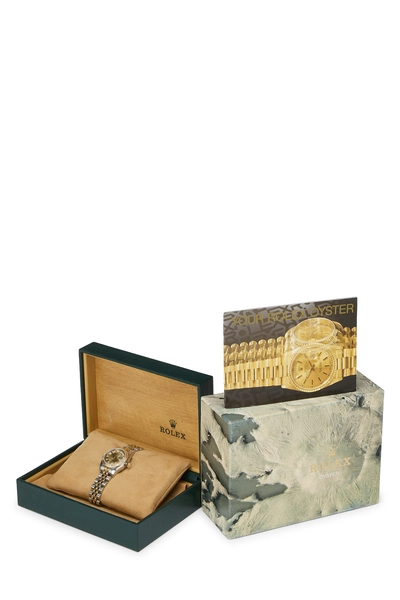






.WebP?sfrm=jpg&q=80)


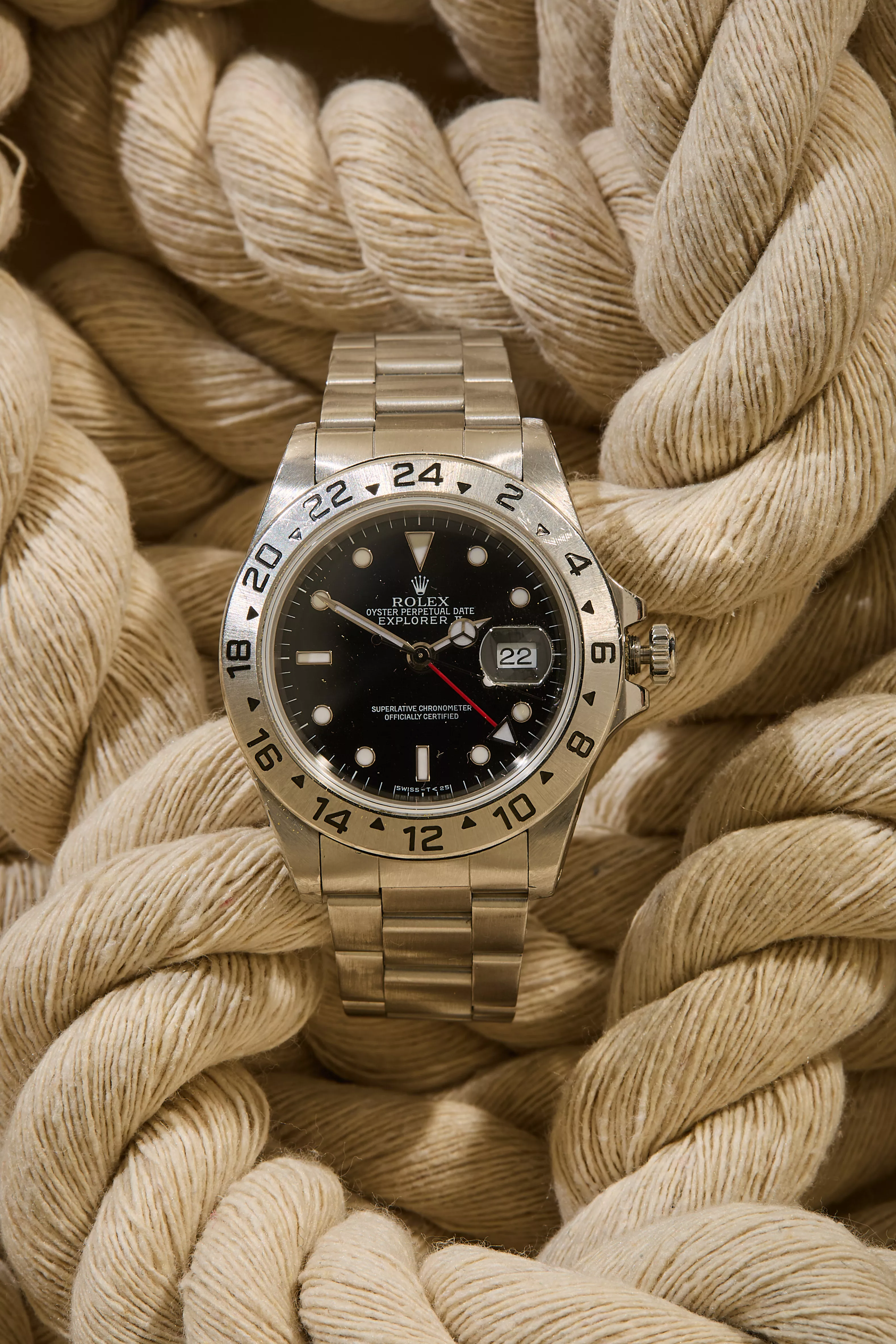

The Oyster case is Rolex’s signature water-resistant case architecture. It forms the protective housing around the movement and incorporates components such as the middle case, caseback, bezel, crystal and winding crown.
The case refers to the watch’s complete housing, while the caseback is specifically the rear component that closes and protects the movement. Understanding the distinction is particularly useful when discussing Rolex construction and authentication.
The bezel is the ring surrounding the crystal. Depending on the Rolex model, it can be decorative or functional. For example, the Submariner uses a rotating bezel to track elapsed dive time, while the GMT-Master II uses a 24-hour bezel to help read an additional time zone.
A fluted bezel features a distinctive ridged pattern that has become one of Rolex’s most recognizable design elements. The fluting originally served a functional purpose by providing grip for securing the bezel to the Oyster case. Today, Rolex’s fluted bezels are made exclusively from 18k gold or 950 platinum.
No. Although the fluted bezel is strongly associated with both collections, neither the Datejust nor the Day-Date is defined exclusively by that configuration. Rolex has produced both collections with other bezel styles.
What Goes Around Comes Around now offers worldwide direct shipping through DHL. Shop our site in your selected currency. Shipping fees and taxes will be added in checkout.
![flag]() USA
USA![flag]() Algeria
Algeria![flag]() Andorra
Andorra![flag]() Anguilla
Anguilla![flag]() Antigua and Barbuda
Antigua and Barbuda![flag]() Argentina
Argentina![flag]() Armenia
Armenia![flag]() Aruba
Aruba![flag]() Australia
Australia![flag]() Austria
Austria![flag]() Bahamas
Bahamas![flag]() Bahrain
Bahrain![flag]() Barbados
Barbados![flag]() Belgium
Belgium![flag]() Belize
Belize![flag]() Bermuda
Bermuda![flag]() Bolivia
Bolivia![flag]() Bosnia and Herzegovina
Bosnia and Herzegovina![flag]() British Virgin Islands
British Virgin Islands![flag]() Bulgaria
Bulgaria![flag]() Cabo Verde
Cabo Verde![flag]() Canada
Canada![flag]() Cayman Islands
Cayman Islands![flag]() Chile
Chile![flag]() China
China![flag]() Colombia
Colombia![flag]() Cook Islands
Cook Islands![flag]() Costa Rica
Costa Rica![flag]() Croatia
Croatia![flag]() Curaçao
Curaçao![flag]() Cyprus
Cyprus![flag]() Denmark
Denmark![flag]() Dominican Republic
Dominican Republic![flag]() Ecuador
Ecuador![flag]() Egypt
Egypt![flag]() El Salvador
El Salvador![flag]() Fiji
Fiji![flag]() Finland
Finland![flag]() France
France![flag]() French Polynesia
French Polynesia![flag]() Georgia
Georgia![flag]() Germany
Germany![flag]() Gibraltar
Gibraltar![flag]() Grenada
Grenada![flag]() Honduras
Honduras![flag]() Hong Kong
Hong Kong![flag]() Hungary
Hungary![flag]() Iceland
Iceland![flag]() Ireland
Ireland![flag]() Israel
Israel![flag]() Italy
Italy![flag]() Jamaica
Jamaica![flag]() Japan
Japan![flag]() Jordan
Jordan![flag]() Kuwait
Kuwait![flag]() Liechtenstein
Liechtenstein![flag]() Luxembourg
Luxembourg![flag]() Maldives
Maldives![flag]() Martinique
Martinique![flag]() Mexico
Mexico![flag]() Monaco
Monaco![flag]() Montenegro
Montenegro![flag]() Morocco
Morocco![flag]() Netherlands
Netherlands![flag]() New Zealand
New Zealand![flag]() Norway
Norway![flag]() Pakistan
Pakistan![flag]() Poland
Poland![flag]() Portugal
Portugal![flag]() Qatar
Qatar![flag]() Saudi Arabia
Saudi Arabia![flag]() Seychelles
Seychelles![flag]() Singapore
Singapore![flag]() Slovenia
Slovenia![flag]() Sri Lanka
Sri Lanka![flag]() South Korea
South Korea![flag]() Spain
Spain![flag]() Sweden
Sweden![flag]() Switzerland
Switzerland![flag]() Taiwan
Taiwan![flag]() Thailand
Thailand![flag]() Trinidad and Tobago
Trinidad and Tobago![flag]() Turkey
Turkey![flag]() Turks and Caicos Islands
Turks and Caicos Islands![flag]() United Arab Emirates
United Arab Emirates![flag]() United Kingdom
United Kingdom![flag]() Venezuela
Venezuela![flag]() Vietnam
Vietnam


